
The idea behind the Battery Box came to René Depuis, product manager at the company that manufactures and sells the box, Whtif, in 2021.
– One day the kid was standing there with the used batteries for his gaming controller. I was familiar with the dangers of batteries going astray, and I thought it had to be possible to create a simple and safe solution so that the batteries would actually be taped up and recycled. And I think we have done that.
The result is a patented battery box that will help ordinary households and businesses get control of their used household batteries. Also built into the box is a tape dispenser with specially made stickers. The stickers are intended to cover the battery terminals, so that the batteries cannot short-circuit, heat up and cause a fire. The box has been tested to withstand battery fires at 618 degrees, but the inventors believe it can withstand higher temperatures.
The idea behind the battery box is much the same as for a bicycle helmet. If the accident happens first, the battery box will take most of the impact, just like a bicycle helmet will do when you fall. And just like a bicycle helmet, you will therefore have to replace it with a new and undamaged box afterwards.
Importance of good habits
According to the Norwegian Environment Agency, approximately 65% of portable batteries are collected through producer responsibility companies. In comparison, over 92% of all beverage packaging with a deposit label in Norway is returned.
When it comes to how many of the batteries are taped, neither the Norwegian Environment Agency nor one of the largest producer responsibility companies, Norsirk, has an overview of this.
More and more of what people have at home is becoming wireless and therefore battery-powered. Therefore, Depuis believes that taking good care of and recycling used batteries will become even more important in the future.
– Raising awareness that batteries are a separate type of waste is important. It has only been 13 years since it was legal to throw batteries in the trash. At that time, lithium batteries were almost nonexistent.

The risk of fire or other damage depends on the chemical substances and how much residual energy the batteries contain, but Depuis believes lithium batteries are particularly vulnerable. They are easily affected by external stresses, can puncture or short-circuit and catch fire.
Many batteries contain environmentally harmful substances and corrosive battery acid. When such batteries are disposed of incorrectly and the toxins are released, they can cause great harm to people or nature.
In the same way that we sort waste and have separate containers for cardboard, paper and food waste, we should have one for batteries, says Depuis.
– The most important thing you can do is build good habits for safe and good battery recycling. That work must start at home.
He also believes that it is safer to store the batteries in a closed box. Children and pets cannot get hold of the batteries, swallow them or otherwise injure themselves.


Fire hazard in several areas
According to the Directorate for Civil Protection and Emergency Preparedness, there have been over 160 fires in homes or other buildings involving batteries that have not been connected to charging since 2022. This applies to all types of batteries, both new and used. Many fires are not recorded as a cause, so there may be hidden figures.
Further down the value chain, batteries can start fires in both waste trucks and facilities. According to Norsk Industri, batteries are the cause of 85% of fires in the recycling industry where the cause is known.
One of the most serious fires occurred at a waste facility in Sandnes in the summer of 2022. The facility was destroyed and assets worth around NOK 650 million went up in smoke.
This is what it can look like when batteries catch fire inside the battery box. The video shows testing in Denmark
Still in development
The process from idea to finished product has taken several years, and Depuis says they still have things they can and want to improve. Small adjustments are constantly being made based on user feedback.
The first fire and heat tests began in the spring of 2023, and continued until October of the same year, before testing at the Danish Fire and Security Technical Institute in January 2024.
There are many thoughts and ideas that have been discarded or changed, and many details that have been reviewed. The box consists of six different parts, each of which has been carefully designed.
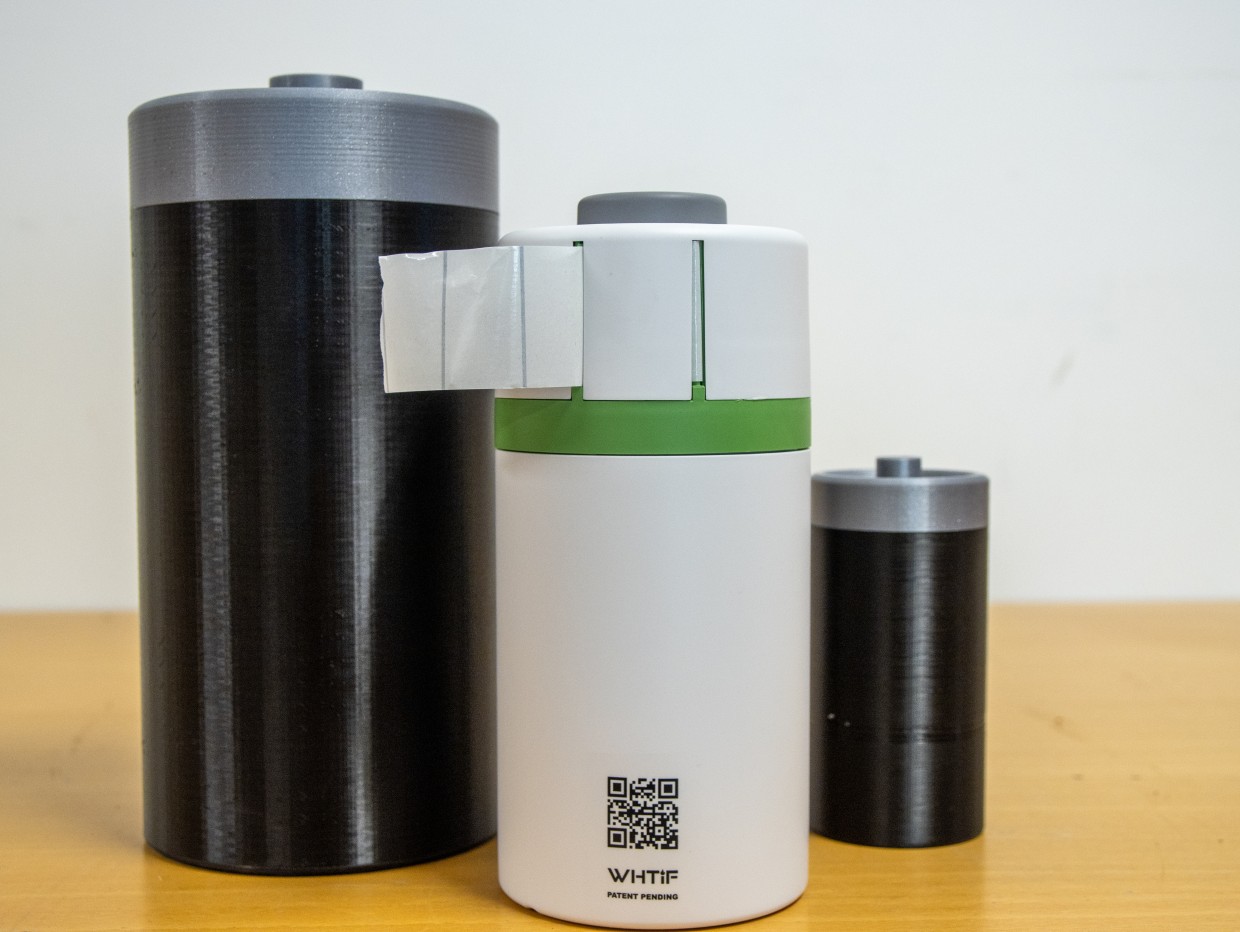
To make testing more efficient, they used 3D printing, so they could quickly have new variations of the box. The disadvantage of 3D printing is that the quality of the product was not as good as they wanted.
– We used materials that we knew would be inferior to the finished molded products, but which still gave good results. For the “torture testing” we also chose a battery that, in terms of energy, surpasses all known consumer batteries the box is designed for, says Depuis.
The box itself is constructed of the same type of material as in sockets. It will only soften, but will not start to burn. The material is endothermic and meets the requirements for the V-0 UL94 fire classification.
Depuis says they have had to think about both product safety and user-friendliness.
– User-friendliness is important for the product to be used at all. If the product is not used, you are making a mistake. If things are too difficult to use, people will not bother using the product. We were therefore very careful about how we thought along the way, so as not to sacrifice security.
Many good helpers
Depuis, which has extensive experience in selling safety products, has had many meetings with various stakeholders, both in waste management and fire protection.
He has also had many collaborators, advisors and others who have helped.
– Along the way, you meet a lot of good people! We have people who are good designers, people who have experience with materials, production, marketing and fire protection. The battery box would not have seen the light of day without them!
Depuis and the others have been developing the battery box alongside their regular jobs. The company Depuis is employed by has supported Whtif financially, and has taken on the ownership role. The company also acts as a distributor of the battery boxes in Norway.
– This became a side project alongside work, which meant that things took time. Considering the market situation, we probably should have spent more time on this earlier, but it turned out that way. People joined in because they thought it was fun, and no one has received a salary from Whtif yet, says Depuis.
Because the battery box is a relatively simple product with a large potential market, also outside Norway, Whtif has chosen to patent the invention. First in Norway, but they have also submitted an international PCT application.
– Patenting is not cheap, and you almost have to know your own language to make it happen. But we felt it was worth it to protect the idea, says Depuis.
Whtif received good help from a patent attorney in drafting the patent application.
– We had a good meeting with them where we presented the product and the technical details. Then we received a first draft of a patent application that we could work on further.
Had to keep details secret in hopes of prize money
Much of the company's funding came from when the battery box won the Norwegian Fire Protection Association's innovation award for 2023.
The cash prize came in handy when Whtif was about to put the product into production.
But since the battery box was in the process of being patented, they had to be careful to keep some information secret. It is not possible to patent technology that is already publicly known.
Therefore, the jury was instructed to keep the contents of the application confidential until the patent application was filed.
Such confidentiality agreements, such as the one between Whtif and the Norwegian Fire Protection Association, can often be a good solution, says senior engineer at the Norwegian Patent Office, Elen Margrethe Brendeford.
– Most entrepreneurs and inventors need to talk to investors early in innovation projects to secure financial support. At this early idea stage in the innovation process, it is important to use non-disclosure agreements as a basis for protecting confidential information.

A non-disclosure agreement or NDA (Non-Disclosure Agreement) is a legally binding agreement used to protect confidential information between two or more parties.
“ Breach of such a declaration can have legal consequences. Non-disclosure agreements are a reasonable legal document to reduce the risk that confidential information that could provide a future competitive advantage remains secret until a decision is made whether the new product and/or service that has been developed should be protected by patent, or remain a trade secret,” says Brendeford.
Investing further into the world
Whtif and the battery box have received a lot of attention both in Norway and internationally.
Now the first battery boxes have been produced and are on sale in Scandinavia, and they are also planning to launch in other countries.
In addition, they have thoughts about similar battery boxes for other types of batteries than regular household batteries.
Although Depuis and Whtif have several ideas, they are not yet finished developing the battery box.
They want the product to be used in thousands of homes, and therefore they want to meet more ordinary people and hear their thoughts about the product.
In addition, they want to hear from customers, especially those who have experienced fires or overheating from batteries in the box.
– Battery fires are very different from time to time, so we need experience to learn more and develop the battery box further, says Depuis.


